Eben Etzebeth is no stranger to physical rugby. In fact, his reputation as one of the world’s most intimidating and explosive forwards is a key part of what makes him a Springbok legend.
But on a fiery test match night, even a player with his discipline and experience found himself on the wrong side of the law — receiving the first red card of his international career following a retaliation incident that included what match officials interpreted as an eye-gouge motion.
The incident has sparked debate across the rugby world, with fans, analysts, and former players weighing in on whether the punishment fits the moment.
The Incident: What Actually Happened
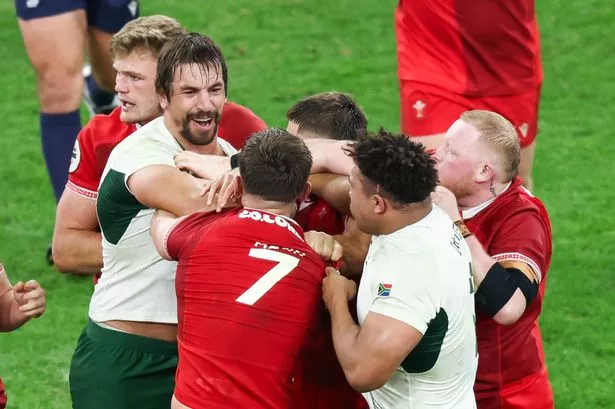
In the second half of the match, tensions boiled over when Etzebeth reacted to aggressive contact at the breakdown. The South African lock was held down and provoked by his opposite number, who appeared to make unnecessary contact with Etzebeth while he was on the ground.
Etzebeth responded by reaching toward the opponent’s face in an attempt to free himself — a split-second decision that caught the eye of both the referee and the TMO.
On slow-motion review, the officials interpreted his hand movement near the eyes as “reckless contact”, falling under World Rugby’s strict guidelines regarding head and facial safety.
Within moments, the red card was issued.
What made the moment even more dramatic was that Etzebeth had been enjoying a dominant performance he had already scored one of South Africa’s 11 tries, showcasing his power and influence throughout the match.
Will Etzebeth Face a Severe Ban? Probably Not
Based on initial disciplinary expectations, Etzebeth is likely to receive a punishment on the lower end of the sanction scale and for good reason:
1. His Track Record Is Exceptionally Clean
- This was his first career red card, despite over a decade of playing brutal test rugby in the tight five.
- His most notable previous incident dates back to 2012, when he was handed a two-week ban for an attempted headbutt against Australia.
Since then, he has maintained a remarkably disciplined record given his enforcer role.
2. The Action Appeared Reactive, Not Malicious
Disciplinary committees consider intent, and replays suggest Etzebeth was retaliating under provocation, not initiating facial contact without cause.
3. No Significant Injury Resulted
This often influences sanction severity at the international level.
Given these factors, rugby insiders expect something between a 1–3 week suspension, depending on how the hearing views the “eye-area contact.”
The Bigger Picture: What This Means for the Springboks
Etzebeth’s absence even temporarily has both tactical and symbolic implications.
A. The Springboks Lose Their On-Field Enforcer
South Africa’s pack relies on his:
- physical dominance
- lineout presence
- communication
- intimidation factor
Without him, leadership responsibilities shift to players like Siya Kolisi or Pieter-Steph du Toit to maintain physical and emotional control.
B. Discipline is a Growing Theme for World Rugby
Officials are increasingly strict regarding:
- head contact
- eye-area contact
- retaliation
- dangerous cleanouts
Whether intentional or not, actions near the eyes are under zero tolerance, and Etzebeth’s red card is a reminder of how quickly situations can escalate into match-changing decisions.
A Moment to Learn From For Etzebeth and the Team
Etzebeth is known for pushing the line but rarely crossing it. This makes the red card an anomaly but also a moment for reflection. Even the most experienced players can get caught up in the heat of the moment, especially in test-level rugby where provocation is part of the psychological battle.
Expect him to return:
- sharpened
- disciplined
- and even more motivated
especially after a high-profile disciplinary review.
Final Thoughts
Eben Etzebeth’s red card was shocking not only because of the nature of the offense, but because it involved a player who has built a reputation on disciplined physicality over the span of his long career.
While the incident overshadowed his earlier try and strong performance, it is unlikely to tarnish his legacy — nor is it expected to result in a severe or long-term ban.
Instead, it becomes a talking point in the ongoing evolution of rugby’s disciplinary landscape and a reminder that even South Africa’s hardest hitter must navigate the tighter, modern interpretation of foul play.